
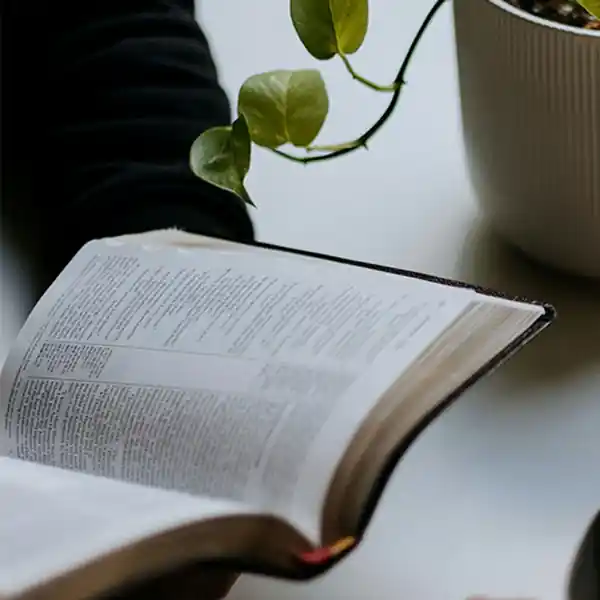
The Scripture Practice is the slow, prayerful, contemplative reading of Scripture with the goal of formation, not only information.
How information is consumed in the modern world is not conducive to reading the Bible the way it was designed.
We live in an era of scrolling, snippets, and soundbites—where attention spans are shaped by headlines, notifications, and 30-second videos. This way of consuming information can make us impatient with the Bible, which was not written for quick consumption but for deep meditation.
If we let the habits of the digital world shape how we approach Scripture, we’ll be tempted to treat it as just another source of information. But the Bible is not merely informational—it is transformational. It’s a living word, meant to penetrate our hearts, orient our minds, and shape our lives in Christ.
The invitation for us, then, is to resist the cultural current of hurried consumption and step into the ancient rhythm of slow, contemplative reading. In doing so, we allow Scripture not only to inform us but to form us—to become the kind of people who naturally live as Jesus would, in our time and place.
This week, we begin by looking at the context of what Jesus meant when He spoke of “the Law of Moses, the Prophets, and the Psalms” in Luke 24:44 “This is what I told you while I was still with you: Everything must be fulfilled that is written about me in the Law of Moses, the Prophets and the Psalms.”
In the Hebrew Scriptures, the Law of Moses (Torah or Pentateuch) refers to the first five books of the Bible. The Prophets include the books from Joshua through Malachi. The Psalms, shorthand for the remaining books known as The Writings, begin with the book of Psalms through Chronicles. Together, these three sections form the Hebrew Bible—what we call the Old Testament—when combined with the New Testament become a unified story from Genesis to Revelation that all points to Jesus.
It’s significant that the first book of the second section of the Bible, The Prophets (Joshua) and the first book of third section of the Bible, The Psalms or The Writings, (Psalms) both begin with a call to meditate on God’s Word:
Joshua 1:8: “Keep this Book of the Law always on your lips; meditate on it day and night…”
Psalm 1:2: “…but whose delight is in the law of the Lord, and who meditates on his law day and night.”
“In both passages, the Hebrew word for meditate is hagah—to murmur, growl over, or chew on something. This is like a dog with a bone that it continues to gnaw on over and over, savoring it, sucking the marrow out of it. I like to think of it as “wrestling” with Scripture: engaging deeply, mulling on it, having an intense focus, asking questions, sitting with tension, and revisiting passages until their truth becomes part of us. This is why we can read the same verse many times and still receive something new—because God’s Word is living and active, ready to shape us when we slow down and listen, repeatedly. THIS is how the Bible was designed to be read, not scanning for the highlights like a newsfeed in social media, picking and choosing what we like. Slow down. Read. Meditate. Pray. Contemplate.
One way to enter into this meditative rhythm is through a method of reading the Bible called Lectio Divina:
- Read (lectio): Let the words rise gently from the page.
- Meditate (meditatio): Go over them slowly, 2–3 times.
- Pray (oratio): Respond to God in conversation.
- Contemplate (contemplatio): Rest quietly in His presence.
You might also try the Discovery Bible Study method:
- What does the passage say?
- What does it reveal about God?
- What does it reveal about people?
- What needs to change in my life as a result?
- Who else needs to hear this?
Or the SOAP method: Scripture – Observation –Application – Prayer.
Whichever method you choose, your goal is not speed but openness—to receive God’s Word in a way that shapes who you are, how you see the world, and how you live. When you meditate on Scripture, you are making space for the Holy Spirit to transform you into a person who naturally lives in step with Jesus.”